Follow Me On Social Media!


Korean Beef Bibimbap Bowl: Quick, Colorful Comfort Food Bliss

Introduction to Korean Beef Bibimbap Bowl: Quick, Colorful Comfort Food
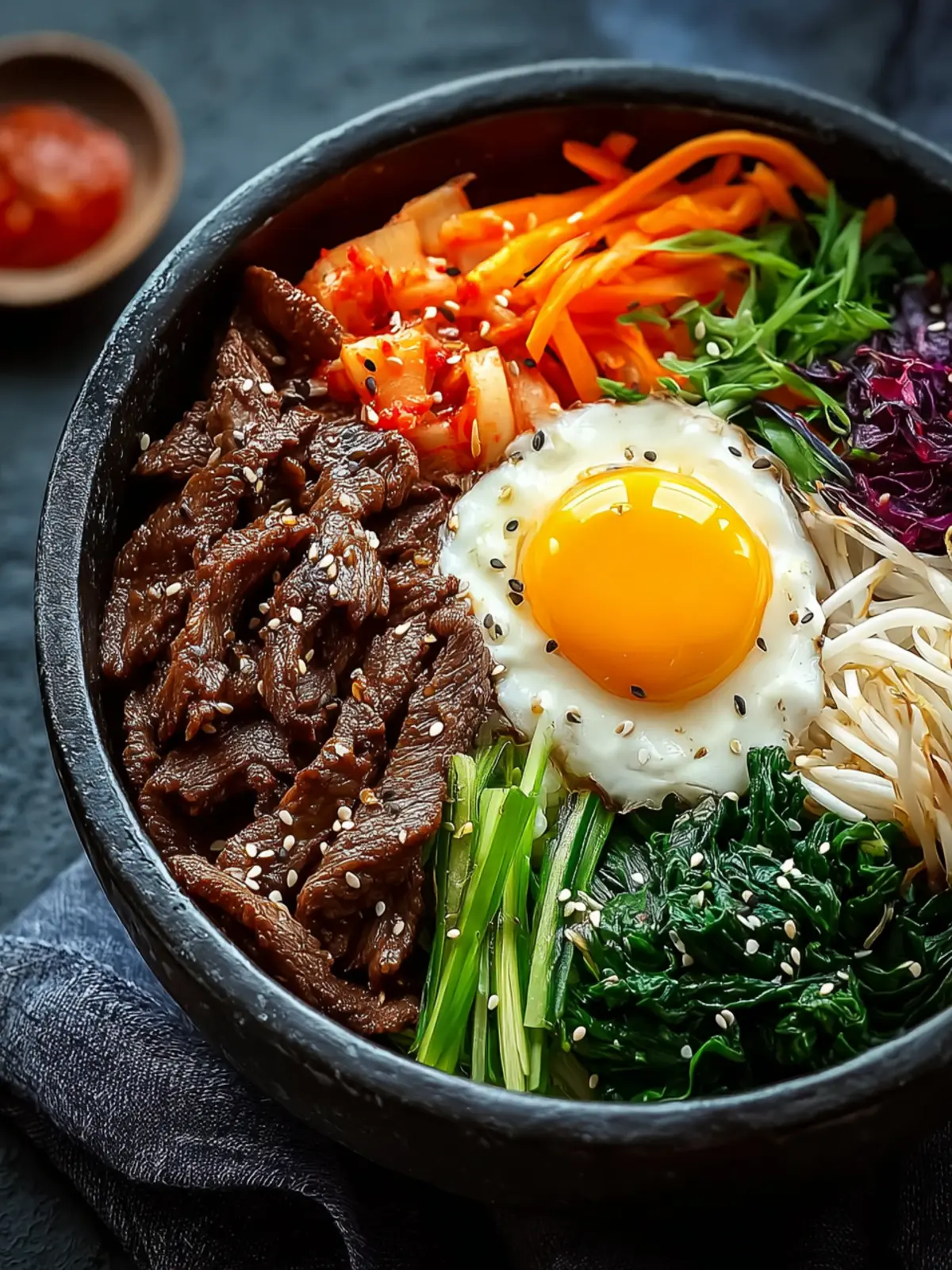
The Korean Beef Bibimbap Bowl is not just a dish; it’s an experience bursting with flavor, color, and comfort. Imagine a vibrant bowl filled with perfectly seasoned ground beef, fresh, crisp vegetables, and aromatic rice, all crowned with a fried egg and the zing of gochujang sauce. It’s a dish that brings together the hustle and bustle of everyday life and the joy of savoring homemade meals.
Discover the joy of homemade meals in your busy life
In today’s fast-paced world, finding time to prepare a healthy meal can often feel like an uphill battle. However, the beauty of the Korean Beef Bibimbap Bowl lies in its simplicity and adaptability. You can whip it together in under 30 minutes, making it perfect for a weeknight dinner when you’re rushing home from work.
Let’s talk about the vibrant ingredients that come together to create this delightful comfort food:
- Ground Beef: Opt for lean beef to keep it light yet flavorful. Seasoning it well ensures the beef provides a savory depth that complements the freshness of the vegetables.
- Vegetables: Here’s where the magic of color comes into play. Choose a mix of your favorites—like spinach, carrots, and cucumbers. Each brings a unique crunch and nutritional benefit, creating a gorgeous visual appeal in your bowl.
- Rice: A foundation of fluffy, steamed rice ties all these elements together, making each bite satisfying. You can use white, brown, or even cauliflower rice for a healthier alternative.
- Fried Egg: The egg is a delightful finishing touch. The yolk adds creaminess, enhancing the overall richness of the dish, especially when mixed into the rice and vegetables.
- Gochujang Sauce: This Korean chili paste gives the bibimbap its iconic kick. A little goes a long way, so you can adjust the spice level to suit your taste preferences.
Crafting your own Korean Beef Bibimbap Bowl means you can customize it to fit your lifestyle, while also enjoying a wholesome meal that brightens up even the busiest of days. Ready to elevate your weeknight dinners? Let’s dive into the recipe!

Key Ingredients for Korean Beef Bibimbap Bowl
Ground Beef: The star of our Korean beef bibimbap bowl is the ground beef, which provides a savory foundation. I prefer using lean ground beef for a healthier option without compromising flavor. The key is to season it well with soy sauce and sesame oil for that authentic Korean taste.
Rice: A bowl of bibimbap wouldn’t be complete without the perfect base of fluffy rice. I use short-grain white rice for its sticky texture, which helps hold all the tasty ingredients together. If you’re feeling adventurous, brown rice works too for a nuttier flavor and added fiber.
Vegetables: Fresh vegetables are essential for a colorful presentation and vibrant taste. I like to use sautéed spinach, julienned carrots, and thinly sliced cucumbers for crunch. Don’t forget about the bean sprouts; they add a satisfying crunch!
Egg: A fried or poached egg on top brings richness to your Korean beef bibimbap bowl. The runniness of the yolk blends beautifully with the other ingredients.
Gochujang: This spicy-sweet red chili paste is the magical finishing touch. It adds depth and a kick of heat that perfectly balances the flavors. Adjust the amount to suit your spice preference!
Why You’ll Love This Recipe
Korean beef bibimbap bowl serves as an exciting canvas for flavors and textures, truly embodying the definition of quick, colorful comfort food. With every bite, you’re not just tasting a meal; you’re experiencing a harmonious blend of vibrant ingredients that transport you straight to a bustling Seoul street market. As a busy young professional, discovering a dish that’s not only satisfying but quick to prepare is a rarity, and this recipe ticks all the boxes.
A Symphony of Nutrients
The beauty of the Korean beef bibimbap bowl lies in its balance. Packed with rice, lean beef, and an assortment of vegetables, it’s a nutrient-rich meal that makes you feel energized and satisfied. A combination of colorful veggies like carrots, spinach, and cucumber ensures you’re not just indulging but nourishing your body, making it a guilt-free choice for lunch or dinner.
Convenience Meets Flavor
In today’s fast-paced world, we often compromise taste for convenience. But this recipe strikes that perfect balance, boasting a smoky, savory flavor from the marinated beef and the addition of a fried egg to top it off. Ready in under 30 minutes, it’s ideal for those evenings when you crave comfort but are too tired to spend hours in the kitchen.
Customizable Goodness
What’s more, this dish allows for creativity. If you have leftover veggies or prefer tofu over beef, this bibimbap is your culinary playground. It’s a dish that invites personal touches, making it not just a meal but an enjoyable cooking experience that brings joy to your kitchen.

Cooking Tips and Notes
Creating the perfect Korean Beef Bibimbap Bowl isn’t just about following a recipe; it’s about inviting flavors, textures, and colors to dance on your plate. Here are some tips to ensure your bowl is as vibrant and satisfying as possible.
Choose Fresh Ingredients
Using fresh vegetables makes all the difference. For your bibimbap, look for bright, crisp produce. Think about mixing different textures—crunchy cucumbers, tender spinach, and earthy mushrooms. Fresh vegetables not only taste great but also elevate the visual appeal of your bowl.
Master the Rice
For a great bibimbap, start with the best rice. Short-grain rice works wonders because it’s stickier and holds together nicely. If you don’t have a rice cooker, using the stovetop method with a measured water-to-rice ratio will yield perfect results. Remember to let it rest for about 10 minutes after cooking for the best texture.
Balance Flavors and Textures
A key to an amazing Korean Beef Bibimbap Bowl is the contrast between flavors. Try to incorporate both sweet and spicy elements. You can easily adjust the gochujang (Korean chili paste) to suit your preference for heat.
Warm Your Bowl
Don’t skip this simple step! Warming your serving bowl before adding the ingredients helps maintain temperature, making every bite as comforting as it should be.
Garnish Generously
Finally, don’t shy away from garnishes. A fried egg on top is a classic touch, bringing richness and creaminess to your bibimbap. Sprinkle sesame seeds and chopped green onions for added flavor and presentation.
Variations
Exploring the world of a Korean Beef Bibimbap Bowl opens up an array of delightful variations that can suit any palate. Let’s dive into a few ideas to make this comforting dish even more personalized.
Change Up the Protein
While beef is the star in a traditional bibimbap bowl, feel free to switch things up! Try chicken, tofu, or even shrimp for a different experience. Each protein brings its unique flavor and texture, offering something new with every bowl.
Veggie Options
Have a bunch of veggies lying around? Use whatever you have on hand! Consider adding steamed bok choy, roasted carrots, or even a sprinkle of sprouts. The key is to keep the colors vibrant and the textures varied.
Sauce Swaps
The gochujang sauce is iconic, but if you’re in the mood for a little twist, consider mixing it with sesame oil or soy sauce for a unique kick. You can even create a spicy kimchi topping for an added zing.
Grain Base
Traditionally served over rice, why not try a quinoa or cauliflower rice base for a healthier twist? This will not only change the flavor profile but also add an interesting texture to your dish.
These variations let you explore your creativity in making the perfect Korean Beef Bibimbap Bowl!
Serving Suggestions
Crafting a beautiful Korean beef bibimbap bowl isn’t just about the ingredients but also how you present it for that extra wow factor. Here are some delightful serving suggestions that will enhance your meal and make it even more enjoyable.
-
Choose the Right Bowl: Serve your bibimbap in a shallow, wide bowl. This allows for artistic layering of colorful ingredients, making each element visible—after all, we eat with our eyes first!
-
Garnish Thoughtfully: Sprinkle toasted sesame seeds and a few slices of scallion on top for a pop of flavor. A drizzle of sesame oil adds richness, while a dollop of gochujang (Korean chili paste) can bring some heat.
-
Pairing Options: A side of kimchi or pickled vegetables complements your korean beef bibimbap bowl nicely, adding crunch and tanginess.
-
Experiment with Proteins: Try topping your bowl with a fried egg, bulgogi, or tofu for a twist. Each protein adds a unique flavor profile, so don’t hesitate to switch it up depending on your mood.
Enjoy the process of customizing this dish to suit your taste!
Print
Korean Beef Rice Bowl
- Total Time: 45 minutes
- Yield: 4 servings 1x
- Diet: High Protein
Description
A delicious and healthy Korean-inspired beef rice bowl featuring flavorful ingredients.
Ingredients
Scale
- 1 pound Lean Ground Beef
- 3 tablespoons Gochujang Sauce
- 2 tablespoons Low-Sodium Soy Sauce
- 1 tablespoon Sesame Oil
- 2 cups Short-Grain White Rice
- 1 cup Carrots (julienned)
- 2 cups Fresh Spinach
- 1 cup Zucchini (sliced)
- 1 cup Bean Sprouts
- 4 medium Eggs
Instructions
- Cook Rice: Begin by following the package directions for your short-grain rice, which usually takes about 20 minutes to cook until tender and slightly sticky.
- Brown the Beef: In a skillet over medium-high heat, brown 1 pound of lean ground beef for about 5-7 minutes. Make sure to drain any excess fat.
- Flavor the Beef: Stir in the gochujang sauce, low-sodium soy sauce, and sesame oil. Let it simmer on low for 5 minutes.
- Sauté Vegetables: Heat a splash of sesame oil in a separate pan, add in the julienned carrots, sliced zucchini, spinach, and bean sprouts. Sauté for about 7 minutes.
- Fry Eggs: Cook sunny-side-up eggs in a non-stick pan for about 3 minutes until whites are set and yolks remain runny.
- Assemble Bowls: Layer cooked rice in bowls, topped with beef mixture and sautéed vegetables. Finish with a fried egg and additional gochujang.
Notes
- Substitute ground turkey or tofu for a healthier option.
- Adjust the amount of Gochujang sauce for desired heat.
- Use Tamari for a gluten-free option.
- Brown rice can be used for added fiber.
- Optional replacements for vegetables are bell peppers or radishes.
- Replacement options for spinach include bok choy or kale.
- Swap zucchini for summer squash if desired.
- Optional replacement for bean sprouts include water chestnuts.
- Opt for poached eggs if preferred.
- Prep Time: 15 minutes
- Cook Time: 30 minutes
- Category: Dinner
- Method: Stovetop
- Cuisine: Korean
Nutrition
- Serving Size: 1 bowl
- Calories: 600
- Sugar: 4g
- Sodium: 800mg
- Fat: 30g
- Saturated Fat: 10g
- Unsaturated Fat: 15g
- Trans Fat: 0g
- Carbohydrates: 50g
- Fiber: 2g
- Protein: 30g
- Cholesterol: 300mg